
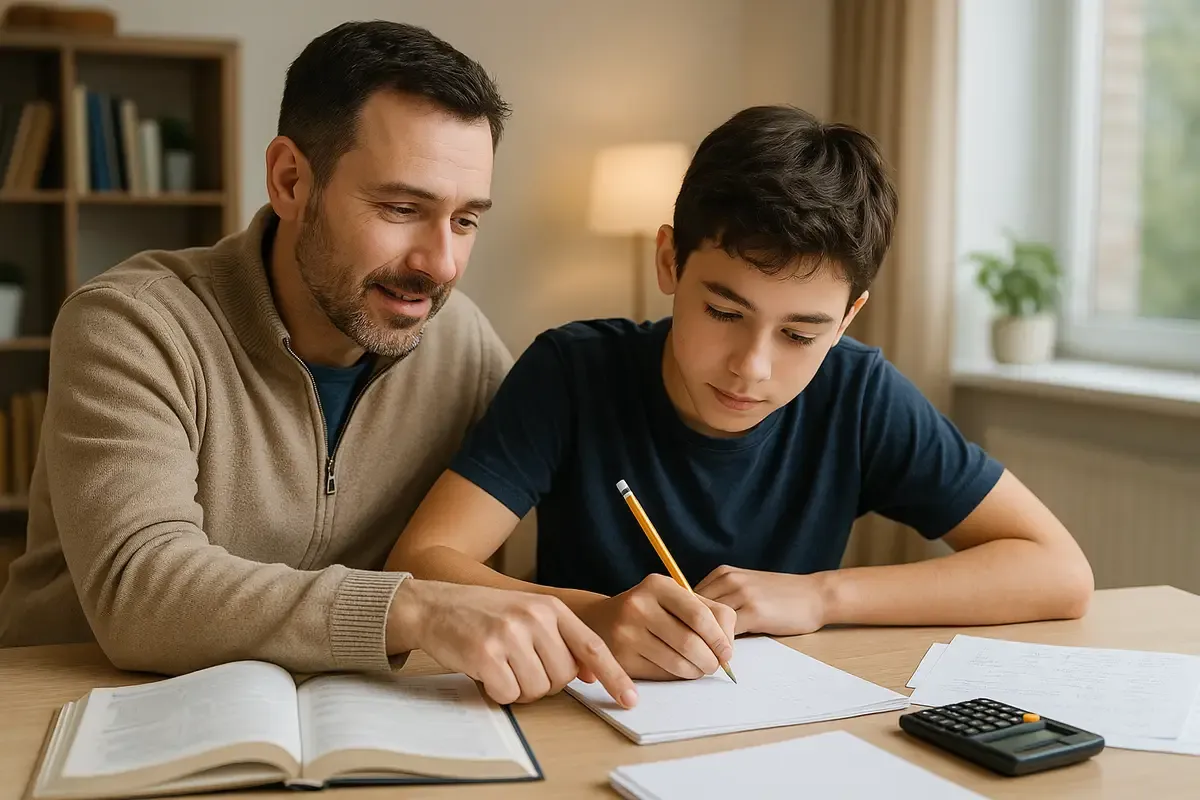
Parents often want to support their child with GCSE Maths but are unsure of the best way to help. Maths can feel intimidating, especially if it has been many years since you last studied it yourself. The good news is that you do not need to be a maths expert to make a real difference.
What matters most is creating the right environment, encouraging good habits, and helping your child stay confident. In this guide, we share practical ways parents can support GCSE Maths revision effectively.
Understanding the Importance of GCSE Maths
GCSE Maths is a key qualification. A grade 4 or above is required for most college courses, apprenticeships, and many jobs. Higher grades can open doors to A-Level subjects such as Maths, Physics, and Computer Science.
When parents understand this, they can frame revision as something valuable rather than something stressful. The focus becomes progress and future opportunities.
Create a Supportive Study Environment
A quiet, organised space helps children focus. This does not need to be perfect, but it should be calm, well-lit, and free from distractions.
Simple steps such as reducing noise, keeping phones away during study time, and having materials ready can make a big difference. A consistent routine also helps children get into “study mode” more easily.
Encourage Regular Revision
Maths improves through consistent practice. Short daily sessions are far more effective than long last-minute revision.
Even 20–30 minutes a day can build confidence if done regularly. Parents can help by encouraging a routine and praising effort.
👉 Your child can practise here: GCSE Maths topics
Use the Right Resources
Having the right materials is important. Make sure your child is using resources that match their exam board.
Combining different types of learning is effective:
- quizzes for practice
- tutorials for understanding
- exam questions for preparation
👉 Core areas to focus on include Number and Algebra.
Talk About Strengths and Weaknesses
Every student has topics they find easier and others they find difficult. The key is to identify weaker areas and focus revision there.
Ask simple questions like:
- “Which topic feels hardest right now?”
- “Which questions did you struggle with?”
This helps guide revision without adding pressure.
Help Reduce Maths Anxiety
Many students feel anxious about maths. Parents can help by keeping the atmosphere positive.
Avoid negative phrases such as “I was never good at maths.” Instead, focus on effort and improvement.
Breaking revision into small steps and encouraging breaks also helps reduce stress.
Make Maths Part of Everyday Life
Maths does not only exist in textbooks. Real-life examples make it easier to understand.
- shopping → percentages and discounts
- cooking → ratios and measurements
- travel → speed, distance and time
These small activities build confidence naturally.
Monitor Progress Without Pressure
It is important to stay involved, but not take over.
Instead of checking constantly, have regular conversations about progress. Encourage independence while showing support.
Celebrating effort is more important than focusing only on results.
Support Exam Practice
Practising past papers is one of the best ways to prepare.
Parents can help by:
- providing a quiet space
- setting a timer
- encouraging review after the paper
This builds confidence and reduces exam anxiety.
Stay Positive
Preparation can feel stressful, so a positive environment is essential.
Praise effort, not just results. Remind your child that mistakes are part of learning.
Confidence grows when children feel supported.
Conclusion
Supporting your child with GCSE Maths does not require expert knowledge. Small actions such as encouraging regular practice, creating a calm study space, and keeping a positive attitude can make a big difference.
With the right support, students can build confidence and improve steadily over time.
👉 If your child needs extra support, you can book a free GCSE Maths intro session to create a personalised plan.