
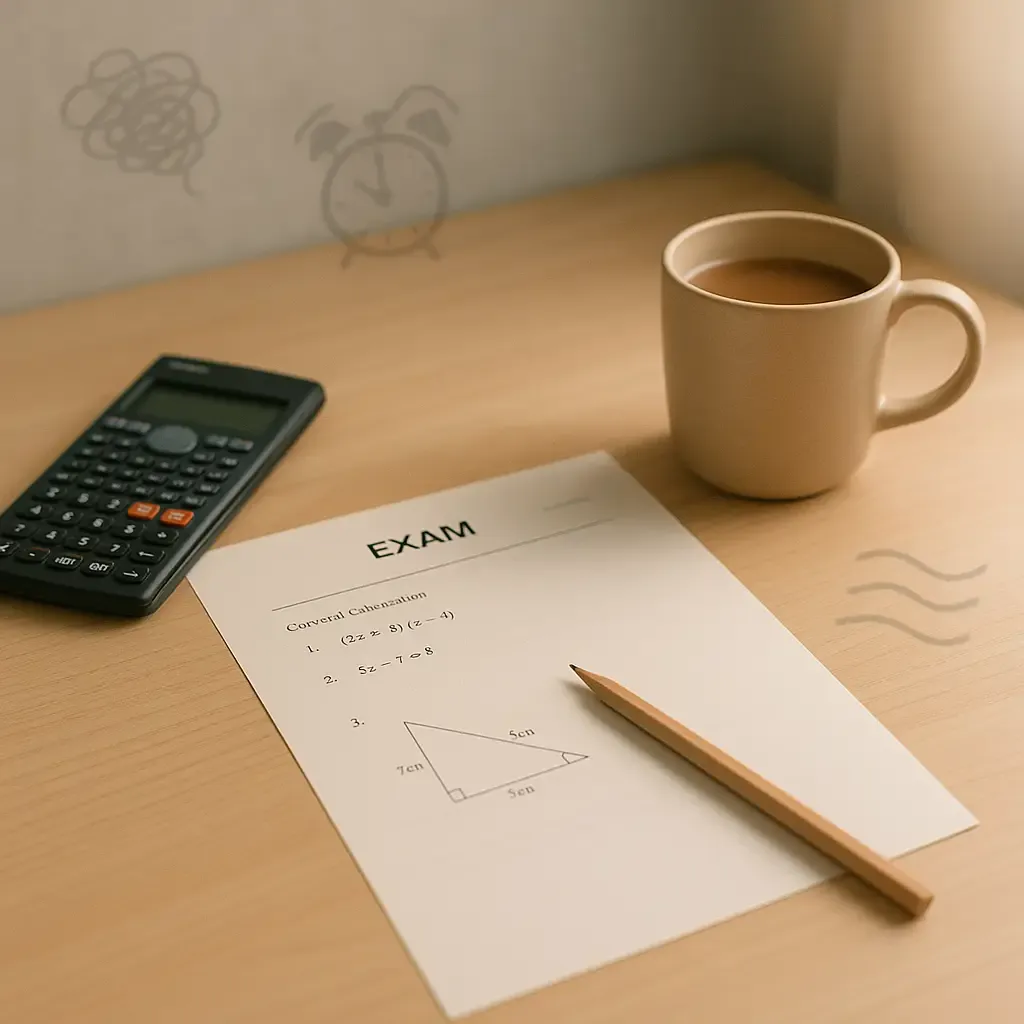
Feeling nervous before an exam is completely normal. However, for many students, maths exams bring a specific type of stress known as maths anxiety. This can cause minds to go blank, confidence to drop, and performance to suffer — even when the knowledge is there.
The good news is that maths anxiety can be managed. With the right preparation, habits, and mindset, students can walk into their GCSE Maths exam feeling calmer, more focused, and in control.
In this guide, we share ten practical strategies to help reduce maths anxiety and improve exam performance.
1. Understanding Maths Anxiety
Maths anxiety is more than just feeling nervous — it is a strong emotional reaction to maths tasks. Many students experience a sudden block when faced with numbers, equations, or problem-solving questions, even if they have learned the methods before.
This often develops over time. It may come from negative classroom experiences, repeated mistakes, or the belief that maths ability is something you are “born with.” In reality, maths is a skill that improves with practice.
Recognising that anxiety is separate from ability is the first step. You are not “bad at maths” — you are reacting to pressure, and that pressure can be reduced.
2. Recognising the Symptoms
Maths anxiety affects both the body and the mind. Physically, students may experience a racing heart, sweaty hands, or tension. Mentally, it can lead to panic, frustration, or the feeling that the mind has suddenly gone blank.
Negative thoughts are also common, such as “I can’t do this” or “I’m going to fail.” These thoughts increase anxiety and make it harder to think clearly.
By recognising these symptoms, students can begin to manage them. Instead of thinking “I’m bad at maths,” it becomes “I’m feeling anxious right now” — and that is something that can be controlled.
3. The Importance of Preparation
One of the main causes of exam anxiety is uncertainty. When students are unsure what will appear in the exam, it creates fear. Preparation removes this uncertainty.
Regular revision using topic-based practice and exam-style questions helps students become familiar with the structure of GCSE exams. Over time, questions begin to feel predictable rather than overwhelming.
Focusing on key topics such as solving linear equations and rearranging formulae is especially important, as these skills appear across many different exam questions.
Preparation builds confidence. The more you practise, the less room there is for panic.
4. Building Confidence with Practice
Confidence in maths comes from doing, not just reading. The more questions you complete, the more familiar the methods become.
Past papers are one of the most effective tools. They show how topics are combined and how marks are awarded. Practising under timed conditions also helps improve exam technique and reduces stress on the day.
Short, focused practice is equally valuable. Quick quizzes, recall exercises, and targeted topic questions all build confidence step by step.
👉 You can practise GCSE Maths topics using our structured sections for Number, Algebra, Geometry & Measures where each topic includes examples, quizzes, and exam-style questions.
5. Learning Relaxation Techniques
Even well-prepared students can feel nervous. Simple relaxation techniques can help control this.
Deep breathing is one of the most effective methods. Slowly breathing in through the nose and out through the mouth helps calm the body and clear the mind.
Mindfulness is another useful approach. Focusing on the present moment — your breathing, your pen, or the question in front of you — prevents your thoughts from spiralling into panic.
Visualisation can also help. Picture yourself opening the exam paper, recognising questions, and solving them calmly. This prepares your mind to stay in control during the real exam.
6. Creating a Healthy Revision Routine
How you revise is just as important as what you revise. Long, exhausting study sessions often lead to frustration and burnout.
Instead, aim for short, focused sessions spread throughout the day. This keeps your brain fresh and improves retention.
Sleep is essential. A tired mind struggles to think clearly and is more likely to panic. Regular sleep helps your brain process information and stay focused.
Exercise also plays a role. Even light activity, such as walking, can improve mood, boost energy, and reduce stress.
A balanced routine keeps both your mind and body ready for exam success.
7. Using Positive Self-Talk
Your thoughts directly affect your performance. Negative self-talk increases anxiety and reduces confidence.
Statements like “I can’t do this” or “I’m going to fail” make it harder to think clearly. Replacing them with “I can improve with practice” or “I know how to approach this step by step” creates a more positive mindset.
This is not about pretending maths is easy — it is about approaching challenges with confidence rather than fear.
8. Managing Time in the Exam
Time pressure is a major cause of stress in GCSE Maths exams. Spending too long on one question can lead to panic later.
A useful rule is one mark per minute. For example, a 5-mark question should take around 5 minutes.
Start with questions you feel confident about to secure marks early. If you get stuck, move on and return later.
Practising full papers under timed conditions is the best way to develop this skill and reduce exam stress.
9. Asking for Support
You do not have to deal with maths anxiety alone. Teachers, parents, and tutors can all provide valuable support.
Teachers can explain difficult topics and guide revision. Parents can help create a calm and structured study environment. Tutors can provide personalised support, focusing on specific areas of difficulty.
👉 If you need structured, one-to-one support, explore our GCSE Maths tutoring, where we focus on fixing one topic at a time and building confidence step by step.
10. Focusing on Progress, Not Perfection
Many students feel pressure to be perfect, but this is unrealistic. GCSE Maths exams are designed so that full marks are rare.
Success comes from steady progress. Every correct method, every mark gained, and every improvement matters.
Moving from a grade 4 to a 5, or from a 5 to a 6, can make a huge difference. Progress is what counts — not perfection.
Start Building Confidence Today
The best way to reduce maths anxiety is to take action. Start with one topic, practise it, and build your confidence step by step.
👉 Explore GCSE Maths topics here: Browse all GCSE Maths topics
Conclusion
Maths anxiety does not have to hold you back. With preparation, practice, and the right mindset, you can stay calm and perform at your best.
By recognising anxiety, building confidence through practice, and using simple techniques to stay focused, you can turn exam nerves into controlled energy.
Remember: success in GCSE Maths is not about being perfect — it is about making progress. With the right approach, you can overcome anxiety and show what you are truly capable of.